Showing posts with label Space Colony. Show all posts

Saturday, September 17, 2011

Help NASA with Space Habitation

College seniors and graduate students can build prototypes to be used in space in the eXploration Habitat (X-Hab) Academic Innovation Challenge. If NASA likes your proposal, they will send you $5-$45 thousand to build your idea. Stop procrastinating and build the space age.


Important Dates
  • March 14, 2011 - Date of Announcement / Release of RFP
  • March 29, 2011 Questions for TIM #1 Due
  • April 1, 2011 Notice of Intent Due
  • April 5, 2011 Technical Interchange Meeting Telecon #1
  • April 12, 2011 Questions for TIM #2 Due
  • April 19, 2011 Technical Interchange Meeting Telecon #2
  • May 6, 2011 Proposal Due Date
  • May 23, 2011 Award Announcements

Friday, August 7, 2009

Urbanization Will Produce Better Space Inhabitants

I saw this and thought to myself that humanity will be mentally ready for space habitation. Seriously, go watch this, wait for the train to pass and you will see how cities are preparing space inhabitants. Then come back here.

20610087_8917470fee_o

Yes, I know, it's another TED lecture, but this is really cool. The fact that a main market street and a train line can be the same thing and occupy the same space is amazing. Based on this I think that, as cities become more dense and more of the same spaces are used for many different things, humanity will be more prepared for space habitation. This is because the culture that will be created in dense cities will value personal space less. This is good because smaller, more dense space habitations will be cheaper to launch. Giving a bigger financial incentive to space habitation. If people can be trained, from birth, to work and live in spaces which are tiny and crowded, I think they will experience less stress in a tiny, crowded space habitation. Thus, the space inhabitant from a crowded city may function better in space then someone who has lived their whole life in the country. 

Not to say that this is all good, crowded cities have a lot of problems. But, It's inevitable that we will be completely urbanized, better space inhabitants in a benefit of urbanization.

Reactions

-Can urbanization damage humanities' chances at space habitation?

Resources

Photo by 顔なし

Brand, Stewart. "Stewart Brand proclaims 4 environmental 'heresies'" July 13, 2009. Online video clip. YouTube. Accessed on August 07, 2009. < http://www.youtube.com/watch?v=TUxwiVFgghE&feature=channel_page >

In Case You Skimmed

  • Cities are crowded
  • More people are moving into cities
  • Thus, more people are living their whole lives in cities
  • So, people will become use to living in crowded spaces similar to the environment in space habitats

Creative Commons License

Thursday, July 23, 2009

Our Education System May Be Blocking Space Habitation

Now, I want to be very clear, a highly educated society is needed for space habitation. But, I think our high schools destroys important qualities of human beings that provides the emotional motivation behind space habitation. It destroys the morality of students and morality is required in the space field because shady operations who value profit over human life will not survive in space; space will find the flaws in anything and use that flaw to rip apart the mission. Our education system is not about education, but crystallization. Students are unwilling to think outside of the box, because if you stay in the box, you are guaranteed an A.

I wrote this essay for my final writing task of high school. We had to argue against one educational philosophy then create our own...

A school with passion for space

The degree is like Ithaca, but the journey to earn a degree has changed greatly. A college degree is not a symbol of years of honing and patient meditation on a field, it has become a symbol of a fast track to the upper-middle class. Students' “thoughts [do not] remain lofty [and]... a fine emotion [does not] touch their bod[ies]”1. Students rush to take AP classes so they may earn credits to graduate from college a year early. Students expect a degree to bring them riches, only to come out of college passionless and doomed to mediocrity. Arriving at Ithaca does not make a man great. What makes a man great is the lessons learned from the road and a passion for life. However, in the modern day, this slow foot journey has been replaced with a bullet train, nonstop from childhood to Ithaca. But, something is lost in the most recent generation. Students do not have a reason to want to go to Ithaca and the slow journey the builds an understanding of what Ithaca, what a degree is, has been lost. Students are just placed on the train by parents who want their children to experience Ithaca, but do not when them to experience the hardships that make makes Ithaca a great place. Students will continue to have their humanity torn from them if we do not demolish those rail lines.


High schools still have a utilitarian mindset despite administrators' ongoing effort to make high schools creative. This has nothing to do with how the teacher conducts his lessons, the goals of the administration, or the intentions of the community; for no parent or teacher wants to crush the spirit of a child. It is due to the culture that has arisen around schools that encourages students to approach school with a utilitarian perspective. The ideal student of top schools like Whitney High School or Princeton High School is the student with a 4.0 GPA, a 2400 SAT score, and 36 ACT score. This ideal student is praised and lusted after so much that "confused kid[s have] parent[s who] t[ell them] it [is] okay to cheat if [they] earned an A, because [their] future was at stake. Just don't get caught, [they] are warned" 2. This is reminiscent of Mr. Harthouse, one of the model utilitarians in Hard Times, who said "I am not a moral sort of fellow... and I never make any pretensions to the character of a moral sort of fellow. I am as immoral as need be" 3. It is as if the student were a machine, expected to give output without giving thought to aspects of humanity like morality or emotions and it is this utilitarian temperament that is creeping into our schools because of the over-reliance on grades.


The current high school system relies too much on grades. As a result the morale and the morality of the student are both negatively affected 4. Students cannot afford to fail (anything short of the model student is defined as failing) so they stick to topics that they are comfortable with and ideas which are already well proven. But, in the process they loss the joy of learning, the thrill of discovery and do not grow. Regurgitating information can guarantee an "A", and in a system where an "A" is next to godliness, that is what students will, unhappily, do. Uncertainty is required to keep the student interested and allow the student to grow5. Yet, uncertainty can bring a failed project, a failed writing risk, or a easily dismissed idea and to become like the model student, one can not fail, ever.


Furthermore, developing a strong moral fiber in the school is discouraged when grades are idealized. Not only in the sense of cheating, but in the sense of other acts where one's conscience must be the guide. Students who value grades alone (as opposed to self-improvement through learning) choose not to help others with their work; students who value grades alone will not look up from the textbook or even explore harder ideas 6. In the movie Smart People, Vanessa, a perfect example of today's model student, continues to study after learning her father is in the hospital with head trauma. Later, Vanessa is concerned not about her father's health, who has had his license revoked because of seizures, but is worried over her lack of transportation to the various resume padding extracurricular activities that have become a keystone in the passionless high school experience. Why should Vanessa or any student do anything but look at their books when they are members of a system which does not give rewards to the helpful, the empathic or the curious and which lavishes praise on the workaholic? Students who value grades alone do not learn to respect learning or life. They do not enjoy the rare experience that is life. They do not give the course material the time it needs to mold and shape a person or try to explore unmapped ideas.


In order to develop a passion for learning, the student must be pushed outside of his comfort zone. In search of the A, students would "rather accept an A in an easy class rather than fail a hard one and learn a great deal from it"7. The student who said this has lost the value of an education while remaining within his comfort zone. The most is learned when the student is challenged and occasionally fails. For example, a student can procrastinate in easy classes will never learn, until he enters the real world, that procrastination is a bad habit. Schools provide a unique environment where students can fail and learn from the failure without the disastrous consequences of the real world. This unique environment is squandered when students are too fearful to take risks; when student believe that everything they have worked for can be lost with each test or essay.

Thus over reliance on grades threatens the following traits which all students enter with: curiosity, the joy of learning, morality, happiness and passion; the on going search for the uncertainty and the trill of unmapped ideas; the certain quark and small gift that lights up a person when they are able to use it, the fulfillment the one searches for when they follow their dreams and the burning desire for growth. When these are lost, any hope of success is lost and mediocrity is ensured. Maybe William Farish did not intend for this to occur when he developed the letter grade system, but this incentive has created the opposite effect; students only want an A, they do not want to learn.

Tony Robbins, life couch and expert in leadership physiology, has said “I believe that the invisible force of internal drive, activated, is the most important thing in the world. I believe emotion is the force of life. All of us here have great minds... and with our minds we can rationalize anything. We can make anything happen”, but there are some people who have all the “education, money and background [they could ever want, but they] spend... their life going in and out of rehab” 8 9. Knowledge is power, but this can not power the soul. One needs something far more powerful then knowledge to achieve, one needs a purpose, a focus, a passion. The current philosophy of high schools not only fails to to promote this essential ingredient to the human experience, but crushes it. “Melissa Roderick, the professor at the School of Social Service Administration at the University of Chicago and co-director of the Consortium on Chicago School Research [speaking on college drop outs said] 'If you go into any urban high school right now and sit down with parents and kids and ask, 'What do you want to get out of high school?' there's only one answer: 'Graduate and go to college.'”10. This mentality is not limited to urban schools, across the world “graduate and go to college” has been the sole directive of all schools. While this objective should be held in high regard, it can not be the sole reason for the school to exist, which shall become the sole reason for the student to go to school; for the philosophy of the school is reflected in it's students. If it is the sole reason, there lacks an internal reason to graduate from high school and college. The student is simply told that he needs to graduate and go to college. This external reason is reinforced through fear of parents and fear of poverty. Those two reasons will not give the student the strength to complete college. For that, the student must realize himself that college is necessary for his goal in life. This is why schools must teach personal development. So that the students can find powerful reasons to support their actions. Once that happens, everything that student intents to do will be done. But, Tony Robbins also points out one more ingredient to success.

Emotional fitness must also be mastered by the student to be successful. If you where to take two job applicants from the same, elite college with the same grades and the same qualifications. It is a dead even tie between those two applicants. But, one applicant was completely unconfident, did not look the interviewer in the eye, was shaking like a dryer the whole time and seemed miserable. The other was confident, radiated passion and love for his work; he made everyone smile when he walked in the door and was full of seemingly endless energy. Who is getting the job? But this is not the only reason schools need to train students in emotional fitness. If the student falls in love, or lusts after someone or feels remorse for a past action, that student will be debilitated as these strong emotions rips through their body. If the student is not trained in emotions, that student will be overwhelmed. But, having complete control over one's emotions gives unstoppable power to that person. Sissy, in the novel Hard Times, was able to wield her emotions with devastating effect. Sissy who does not conform to the utilitarian model student and who is untrained in logic is able to convince Mr. Harthouse to leave town with a “blending of gentleness and steadiness that quite defeated him”11. Thus, emotions play an essential role not only in life, but in success.


W.E.B. DuBois said “to stimulate wildly weak and untrained minds is to play with mighty fires”. The challenge of school builds the fire of passion in the student; to grasp new ideas and unmapped thoughts creates a longing for more of the unknown. Yet, because of the risk aversion caused by the grading system and because of the danger of pursuing the unknown, student stay within comfortable theories and ideas. Never really exploring past the area their teacher has laid out. This puts out this great, life giving fire the school ignites in the student. The student, fearing nonconformity, stops feeding the fire within, which eventually dies. Water is poured on this fire when the student ignores morality in order to become a copy of the model. Emotions become roadblocks and the student looses passion, the only difference between humans and computers. This will lead to the most miserable, lifeless people who come home to tired to take off their shoes. The mighty fire in every student must be protected or else the world will not grow, but will wallow in mediocrity. We must let this great forest fire burn in every student because only in fire does the seeds of youth become strong, mighty trees. ~ The Burning School vs. The Icy School: Destroying and Restoring the Passion and Emotion in Education by Daniel Sims A.K.A. Aron Sora. Republish with permission from me since I wrote it.

I want to quote the key line of my essay. "Thus over reliance on grades threatens the following traits which all students enter with: curiosity, the joy of learning, morality, happiness and passion; the on going search for the uncertainty and the trill of unmapped ideas; the certain quark and small gift that lights up a person when they are able to use it, the fulfillment the one searches for when they follow their dreams and the burning desire for growth. When these are lost, any hope of success is lost and mediocrity is ensured". This does not only apply to the individual, when a society losses these things, it is doomed to mediocrity and crystallization. A society that can not challenge it's ideas will not be able to adapt to space, which will need social concepts untaught of or unimplemented. Without curiosity, space losses something. We have explored because we wanted to know what was over the next hill; we were curious and that provides a lot of the motivation behind space exploration. Societies which are happy with remaining it's current state will not look to better its self or challenge its self. I think our high schools are making people risk aversive. Space is a huge risk, but the risk can be managed. High school students are trained to not take risks, period. Even if the risk can be reduced.

I can not prove this claim, but I think people who are in the space field are the most passionate people in the world. They could be making more money in other fields, they could be in a less politically challenged field, they could take a easier job with more security, but they are here. What amazes me is that so many NASA employees tweet and are blog about space. Space seems to run through the blood of people interested in it. Space is the motivating factor for most everything in these people's lives. In short, I have yet to find a truly miserable NASA employ or sad space cadet. Now, they could be having a bad day because their dream was attacked all day long, but ask anyone at NASA or Virgin Galactic a question and they will light up. This field is tough, yet we all in the space field have internal reasons to be in that field or else they wouldn't be there. Space is one of the most frustrating areas of human activity and we need a society which has passion for space; an internal reason to have a space program and our schools destroy this aspect of humanity. This is why Apollo failed in it's long term goals, we only went because of external reasons (Fear of the USSR) and had no wide spread passion or internal reasons for space.

So, I think we need a school system which preserves passion and the other critical human traits before we can develop space.

Reactions

-Is passion important in the development of a spacefaring species?

-Is our society risk aversive?

-Do you think our education system prevents the development of emotional support for space habitation?

-Can we think inside the box and still achieve space habitation?

Resources

1: Cavefy, C.P. “Ithaca” Nina Alvarez. 31 May 2009. <http://ninaalvarez.net/2007/05/03/poem-of-the-day-49/>

2: Humes, Edward. School of Dreams: Making the Grade at a Top American High School. Florida: Harcourt, 2003 Page 104

3: Dickens, Charles. "Hard Times: Book 3: Chapter 2" eBooks@Adelaide. The University of Adelaide. n.d. Web. May 27, 2009. <http://ebooks.adelaide.edu.au/d/dickens/charles/d54ht/chapter30.html>

4: Schwartz, Berry. "Barry Schwartz on our loss of wisdom." Feb 2009. Online video clip. TED. Accessed on May 23, 2009. <http://www.ted.com/index.php/talks/barry_schwartz_on_our_loss_of_wisdom.html> 12:40 - 13:12

5: Robbins, Tony. "Tony Robbins asks why we do what we do" Jun 2006. Online video clip. TED. Accessed on May 23, 2009. <http://www.ted.com/index.php/talks/tony_robbins_asks_why_we_do_what_we_do.html> 11:04 - 11:51

6: Schwartz, Berry. "Barry Schwartz on our loss of wisdom." Feb 2009. Online video clip. TED. Accessed on May 23, 2009. <http://www.ted.com/index.php/talks/barry_schwartz_on_our_loss_of_wisdom.html> 08:28 - 09:08

7: Humes, Edward. School of Dreams: Making the Grade at a Top American High School. Florida: Harcourt, 2003 Page 82

8: Robbins, Tony. "Tony Robbins asks why we do what we do" Jun 2006. Online video clip. TED. Accessed on May 23, 2009. <http://www.ted.com/index.php/talks/tony_robbins_asks_why_we_do_what_we_do.html> 1:03 - 1:26

9: Robbins, Tony. "Tony Robbins asks why we do what we do" Jun 2006. Online video clip. TED. Accessed on May 23, 2009. <http://www.ted.com/index.php/talks/tony_robbins_asks_why_we_do_what_we_do.html> 4:04 - 4:10

10: Gehrman, Elizabeth . "What makes kids drop out of college?." HARVARD GAZETTE 04 May, 2006. . 31 May, 2009 <http://www.news.harvard.edu/gazette/2006/05.04/13-dropout.html>.

11: Dickens, Charles. "Hard Times: Book 3: Chapter 2" eBooks@Adelaide. The University of Adelaide. n.d. Web. May 27, 2009. <http://ebooks.adelaide.edu.au/d/dickens/charles/d54ht/chapter30.html>

Image by josephleenovak

In Case You Skimmed

-Schools diminish passion in it's students

-Over reliance on grades threatens the following traits which all students enter with:

-Curiosity

-The joy of learning

-Morality

-Happiness

-Passion

-The on going search for the uncertainty

-The trill of unmapped ideas; the certain quark

-Small gift that lights up a person when they are able to use it

-Dreams

-If a society's members do not have these traits, the can not be passionate and active in space

Creative Commons License

Wednesday, July 22, 2009

Do You Want To Be A Space Inhabitant Today?

Thanks to Geekdad for posting this information.

Are you angry because humanity does not have a moon base to celebrate the 40th anniversary of the Apollo 11 mission? Have you been working in the space field since the dinosaurs were alive and you only want to retire in space? Are you an insane blogger who writes about space habitation because he can't live in space? Well, the space community has two solution for you.

The Mars Society’s runs the FMARS program and the Mars Institute’s runs the Haughton-Mars Project. These are simulations, on Earth, of a Mars base. You can volunteer to be a part of this simulations, either as the crew or as mission support. Now, you will be a lab rat. There will probably do something cruel like a solar storm notification while you are at the farthest point from the base in the EVA. But, I think the real thing will be more cruel. So, you can contribute to the establishment of a Mars base while doing something epic. The Mars Society will post on their website when they are taking applications and the Mars Institute will do the same. The Haughton-Mars Project is active in the summer and the FMARS program has had 6 crews over the 7 year program.

FMARS_2009_patch

Monday, July 20, 2009

Space Settlement, Social Media and Blogging

Happy Space Settlement Blog Day. Today we celebrate the 40th anniversary of the Apollo 11 moon lands, not with a party on Moon Base Alpha, but with writing blog posts explaining why we should build a space settlement, about space habitation and on space settlement in general...

Yea... go humanity... we are so... epic... -.-

(Nothing against Space Settlement Blog Day, it's a cool idea, but humanity has epic failed by leaving the moon's surface for so long. The National Space Society is great, humanity epic fails. We should be partying on the moon.)

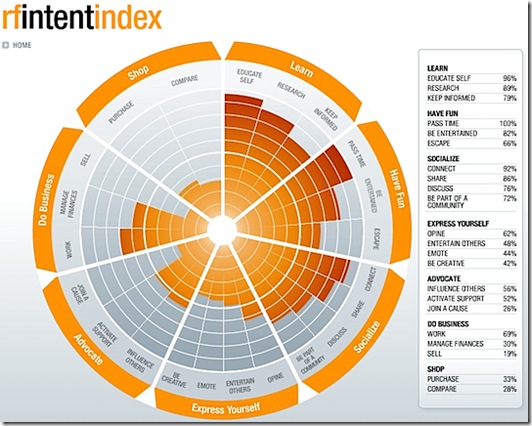
So, I'm going to tell you how social media and blogs will convince humanity of the importance of space settlement. Today, Problogger posted this...

rfintentindex

This where Problogger got this image. 100% of this sample of 500 went online with the intention to pass time; in other words, they went online because THEY WERE BORED. However, only 26% of the sample went online because they wanted to join a cause. So, how do blogs and social media fit into promoting the idea of space habitation and recruiting more members into the space movement? Blogs about space habitation and blogs which talk about space habitation occasionally are very good at connecting to bored people who want to educate themselves or do research for fun. The very best blogs break down complex subjects and make them easy fro the average reader to grasp. If we could draw in a few bored (you have to be really bored to read my blog) people with space settlement blogs and educate them on the subject of space settlement, then we have planted a seed. They may not activate their support then and there, but they will not be opposed to the idea of space settlement with an effective blog; with an effective argument.

This is why I believe that whenever someone is against this idea of space settlement or against funding NASA or against manned space flight in general, it is my fault and the space community's fault. 96% of the people who go on the Internet go on the Internet with the intention for educating themselves. We have to grab that by the horns, we have a audience who will stay around if we teach them because they want to be taught. Blogs, with their oven fresh content, keep bringing in these people who want to learn. Blogs tap into this wandering student; the common Internet user don't wander to NASA's website. Ok, maybe some do, but blogs are geared toward this wandering audience because are jobs is to translate technical writing into non-technical writing. The common Internet user is less likely to wander into a NASA study and read it then a blog reporting on the study. Hopefully, the blog will present the study in a way that the wonderer will read.

What social media and blogs provide the space community with is one of the most effective tools we could ever have; we can provide anyone with the slightest interest in space settlement an expert in the field, or at least a space cadet like me, to have a one-on-one conversation. Recently, I got a Google alert from someone asking on his Live Journal "what's the point of space settlement". I was able to tweet this request and get the many space cadets on twitter to give him an answer, a very clear answer. That's the power we hold with the tools the Internet provides us. We can also craft a more convincing argument for space settlement...

And the premise of "The Wisdom of Crowds" is that, under the right conditions, groups can be remarkably intelligent. And they can actually often be smarter than even the smartest person within them. The simplest example of this is that if you ask a group of people to do something like, guess how many jelly beans are in a jar. You know, if I had a jar of jelly beans, and I asked you to guess how many jelly beans were in that jar,  your average guess would be remarkably good. It would be somewhere probably within three and five percent of the number of beans in the jar,  and it would be better than 90 to 95 percent of you. There may be one or two of you who are brilliant jelly bean guessers, but for the most part the group's guess would be better than just about all of you. And what's fascinating is that you can see this phenomenon at work in many more complicated situations.

So, for instance, if you look at the odds on horses at a racetrack, they predict almost perfectly how likely a horse is to win. In a sense, the group of betters at the racetrack is forecasting the future, in probabilistic terms.  ~James Surowiecki on the turning point for social media

You see, with all these blogs about space and space settlement, we will find out what the public likes and does not like. We can demo new ideas and the ideas which fail are not the ones which will make space settlement reality. In fact, the best blog post submitted for Space Settlement Blog Day should be turned into a pamphlet because it will be one of our better arguments. But, we do have a problem...

So, the ant colony is a great model -- you have all these little parts that collectively add up to a great thing. But we know that occasionally ants go astray, and what happens is that, if army ants are sort of wandering around and they get lost, they start to follow a simple rule -- just do what the ant in front of you does.  And what happens is that the ants eventually end up in a circle. And there's this famous example of one that was 1,200 feet long and lasted for two days, and the ants just kept marching around and around in a circle until they died. ~James Surowiecki on the turning point for social media

So, blogs could bring the death of the space movement. We might end up retweeting and linking to a deadly idea for the movement. This can be adverted by making sure everyone knows where they are going, but the possibility is still there.

So, in short, blogs can create a discussion about space settlement and that is what will get this idea engrained in humanity's culture. If space settlement becomes a cultural goal of humanity, it is sure to happen.

Reactions

-What other disadvantages can blogs bring to the space movement?

-Have you participated in a discussion of space settlement on the web? How did it go?

Resources

"rfIntentindex" Ruder Finn Intent Index. rfrelate. Article date unknown. Web. 7/20/09

Surowiecki, James. "James Surowiecki on the turning point for social media" Nov. 2008. Online video clip. TED. 7/20/09.

In Case You Skimmed

-The people on the Internet are all willing to listen to our pitch

-Bored people tend to go to blogs

-Blogs and social media can create conversations about space settlement

-These conversations will make the space movement stronger

Creative Commons License

Sunday, July 19, 2009

SPC #10: Space-Habitat Illuminators with Non-Imaging Optics

Welcome to the Sunday Paper Club. Every Sunday, this blog will offer analysis of a paper on space habitation and other related topics. These are my opinions on a weekly scientific paper; basically I read the paper and write down my thoughts are I read it. They are subject to my perspectives and believes. I am open to debate, so if any reader believes I have misinterpreted something in a paper, please point it out. I'm only a student and I'm still learning how to read these papers and interpret them. All quotes are from the paper unless otherwise noted. All papers I review are available for free online.

This week we are reviewing the paper Space-Habitat Illuminators with Non-Imaging Optics.

One of the main designs of a orbital space habitat is the cylinder. It has this critical advantage of uniform gravity across the whole habitat of the cylinder rotates in space. But, lighting the habitat is a problem. Using the sun would not allow for a day-night cycle. So, this paper suggests moving the cylinder so the sun does not fall on the inside and using artificial lighting.

(Note: The paper, on page 3, mentions that the atmosphere on this cylinder would block cosmic rays. Sweet, but I have to check on this claim. I'm sure the Earth's magnetic field does most of the radiation shielding for the planet. However, our atmosphere does black UV radiation (before we got to it).)

Again, we run into the energy problem that every future, Macro-engineering project runs into. To artificially light this space habitat, this continent in space, it would take about "7E14 watts [,that is 700,000,000,000,000 watts,] a thousand times [the energy consumed by] the United States today". The paper suggests using this light system to make a water-cycle on the habitat. Maybe a steam machine could artificially produce the same effect, allowing for a lower intensity of lighting.  This would make the system more realistic and make would eliminate the need for a anti-matter power-storage system.

Reactions

-Is the only thing holding humanity back energy?

-Is it worth sacrificing the sanity of the space inhabitants and get rid of the day-night cycle?

-Do you think humans need the day-night cycle to function?

Creative Commons License

Saturday, July 18, 2009

What Do We Know About Space Habitation?

For my 100th post, I would like to ask this question: what do we know about space habitation? When I envision humanity's path to becoming spacefaring, I see a person walking towards a large object in the fog. We are very far away from this large building. Close enough to see that it is, most likely, a building or a boat. You can make out the rough shape of the object, you think. But, by no means can you say for sure what that object is. You have heard myths about a grand temple where the holiest of men gathers and this could be it. But, you do not know all the details of that object, it's name and it's purpose. It's color and it's appearance. You can not tell how well it is maintained from this distance, you just know it's large. You also know, from experience, that it's better to keep move forward then to stay in one place, so you walk towards this object. You follow myth and predictions, but you do not know.

I compare human's place in it's development to the first seconds of sunlight after the darkest part of night. You can make up the rough shapes of objects in the light, it's better then the pitch, black darkness, but you can not exactly tell. You can not read the licence plates and billboards outside your window. We are not even at the dawn of the space age, we are at the first few seconds of the space age's dawn (in terms of our development).

The dawn of the space age

You see, the space community has created tons of predicts on what space habitation will bring humanity. But, we do not know. We can only extrapolate based on what we see in this little bit of light. I think we must wait till the sun raises further on the dawn of the space age to know what benefits space habitation will bring us.

I want you to think about the first seconds of light that glowed on the interconnected age. How could the people who worked with and had passion for the telegraph realize that the idea of sending messages through wires would later change the very social fabric of humanity? Would collapse so many walls and change so many rules? Would they have seen would the telegraph lead to the Internet?

We are in a similar time period. A time period where we do not know what becoming a space faring species will bring us, how it will change us and how the human spirit will adapt to it.

Reactions

Am I off base? Can we predict what benefits space habitation will bring us from what we know now? Are we further along in the dawn of the space then the time I predicted (a few seconds in).

Resources

Photo by Steve took it

In Case You Skimmed

-Humanity is not experienced enough in space to know what space will bring us.

-We have enough date to make predictions.

Creative Commons License

Wednesday, July 15, 2009

Why the Neo-Nazi Mars Base Will Fail

While traveling in twitter land, I came across this little thing... The Mars Initiative. Now, you wouldn't believe me if I didn't quote the site, so I'm just going to let their words explain why the Neo-Nazis are planning are Mars base.

The objective that a Mars colonization plan would set for itself is daunting, so we should remind ourselves that we have a hundred years to fulfill it before our civilization becomes so decadent, impoverished and oppressive that the plan will become impossible for Western Man.  On the scale of hominid history we would be attempting to continue the evolution of humanity as a species, for the move into space will not be just a move for racial survival, in itself it will signify a human upgrade.  Any migration selects the best, leaving weaker members behind, and human migration into space will be no different. ~http://www.marsinitiative.org/

At first I was outraged. But, after unwilling following the blogging golden rule: "Do not post while outraged", I felt bad (for .00001 nano seconds) for the Neo-Nazis. This plan will fail pitifully and it seems like this is a desperate attempt by a dying organization to get attention. However, for this blog post, I'm assuming this idea is serious.

First, the space community is not supporting this in anyway. I've found the space community to be very sensitive to how its actions effect its public image. This is why Virgin Galactic turned down a $1 million dollar deal to shoot a pornographic film in space and why NASA is so squeamish about sex in space. It seems that the space community want to have a clean image, so, to protect this image, they will completely dissociate themselves from The Mars Initiative. No private space company will provide rockets to The Mars Initiative and NASA is just going to laugh at this idea. If The Mars Initiative were to build rockets themselves, they will have trouble accessing patented rocket technology.

At one time, the Neo-Nazis were prompting an idea to send all of the in the US African Americans "back to Africa". They planned to establish a racial colony in Africa. It's very ironic that all the racists are leaving Earth. It would be less weird if the Neo-nazis where telling all black people in the world to leave because, at least, they would be consistent with their historic tone. It really shows how much the Neo-Nazis are on the defensive.

Space exploration and expansion is for HUMANITY not INHUMANITY! ~biffgriff

I also think the Overview Effect will have a devastating effect on The Mars Initiative. Edgar Mitchell said the Overview Effect "gave him a profound sense of connectedness, with a feeling of bliss and timelessness. He was overwhelmed by the experience. He became profoundly aware that each and every atom in the Universe was connected in some way, and on seeing Earth from space he had an understanding that all the humans, animals and systems were a part of the same thing, a synergistic whole. It was an interconnected euphoria" (Universe Today). If the settlers of the Mars Initiative lose their racist opinions because of the overview effect, they will lose the support of their ground control who have not had this revelation and who have spend a lot of money to have a Mars colony devoted to their ideals. If those ideals of racial purity are lost in space, then I fear the Neo-nazi movement who remained behind will take violent action against the colonists. losing ground support would mean death of a crew in space

What if only a small minority of the crew of The Mars Initiative experience the overview effect? Then we could see the first war in space as the crew fights for the direction of the program. At the best, the tension on that ship and on the colony will be so high that the crew will be ineffective.

This idea, I fear, will be a huge mess if implemented. I wish the Neo-Nazi movement will die will the dawn of the space age. Hopefully, as more people see humanity as a united community, racism will die.

(Disclaimer: I'm black, so I'm biased on this topic)  

Reactions

Should the space community actively promote against this? Should we save them if the Overview Effect cripples their mission? Can NASA and other government space agencies stop them from launching? 

Creative Commons License

Saturday, July 11, 2009

Space Habitation Shows the Need to Address Overpopulation

This is a post for World Population Day.

"If our species does not soon embrace this unique opportunity with sufficient commitment, it may miss its one and only chance to do so. Humanity could soon be overwhelmed by one or more of the many challenges it now faces. The window of opportunity is closing as fast as the population is increasing.... Our future will be either a Space Age or a Stone Age."
Arthur Woods and Marco Bernasconi, Space News, 1995 via http://spacequotes.com/

"It may take endless wars and unbearable population pressure to force-feed a technology to the point where it can cope with space. In the universe, space travel may be the normal birth pangs of an otherwise dying race. A test. Some races pass, some fail."
Robert Heinlein, I Will Fear No Evil, 1970 via http://spacequotes.com/

These quotes, along with many others, show that overpopulation is another one of the flagship arguments for space habitation. But, this pillar supporting space habitation is flawed. While space habitation will alleviate the pressures of population by providing more resources to Earth and allowing humanity to expand, our rate of population growth is insane. The growth is so out of control that even if we had the best rockets and best manufacturing systems possible space habitation can not counter population growth...

"So imagine we are in 2058 and we can transport off-planet just as many people as the amount by which Earth's population would have grown. Doing so will merely stabilize the world population at about 10.8 billion - not necessarily a comfortable number.

It would be necessary to transport 108 million people off-planet every year. Assuming that by 2058 we are able to build and use colony ships that will hold 1000 people each, that means 108,000 such colony ships every year. That comes out to about 295 each and every day of the year - more than 12 every hour." ~Hard SF

This is problematic, but let's look at present day. Right now, our population is increase by 9000 every hour. This rate is still a problem. J. H. Fremlin said "At the current rate it would take only about 50 years to populate Venus, Mercury, Mars, the moon, and the moons of Jupiter and Saturn to same population density as Earth. . . It would take only about 200 years to fill [the remaining planets] "Earth-full." . . . What then? ."

I can not claim, that even in the best circumstances, that we can fill all planets "Earth-full". Sure, we can terraform a planet, but many of the planets will need artificial support to maintain an Earth like environment. Furthermore, we will have trouble achieving interstellar space flight in 50 years. The fact that we can fill our solar system in 50 years is unbelievable. If this is true, then we need a fundamental cultural change that will discourage childbirth. Space habitation is a massive effort and if that can't fix this problem after that much energy is spent nothing will, we can not keep creating the problem.

Resources

Image by adriansalamandre

Reactions

Do these numbers seem reasonable? Am I failing to account for an increase in technology? How can we address this problem? Could you fit all those launches into launch windows?

Creative Commons License

Wednesday, July 8, 2009

Space Habitation Will Be Dirty

Barack wants to create two and a half million jobs. The infrastructure is a huge deal.  This war on work, that I suppose exists, has casualties like any other war.  The infrastructure's the first one Declining trade school enrollments are the second one.  Every single year, fewer electricians, fewer carpenters, fewer plumbers,  fewer welders, fewer pipefitters, fewer steamfitters.  The infrastructure jobs that everybody is talking about creating are those guys.  The ones that have been in decline, over and over.  In the meanwhile, we got two trillion dollars, at a minimum,  according to the American Society of Civil Engineers, that we need to expend to even make a dent in the infrastructure which is currently rated at a D minus. ~ Mike Rowe speaking about dirty jobs at a TED conference. (18:13 - 19:11)

I think the way space habitation is depicted is too clean. Space habitation will require tons of skilled labor. But, if we are only producing enough skilled labor to develop a less then mediocre infrastructures on Earth, we will not have enough people to build and maintain a space habitation. A infrastructure rated at "D minus" on a space habitation means death, it means a complete failure of life support system. Maintaining infrastructure on Earth is easy, when compared to repairs in space. Yet, we can't even handle upkeep on Earthly infrastructures. Mike Rowe's words are a clear warning to the space movement, we will need more skilled labor before we will ever build a space settlement.

Reactions

What can we do to produce more skilled labor? Should Science, Technology, Math and Engineering (STEM) be moved out of the ivy tower or will STEM's exclusivity to academia have no effect on producing more skilled labor for space?

Creative Commons License


Tuesday, July 7, 2009

Dear Space Community, Welcome to the Dip

Last updated: July 8th, 2009

I was wandering about my local library when I stumbled across Seth Godin's The Dip. I love Seth Godin's blog, so I had to read this book. There is only one word to describe The Dip : enlightening. As I was reading it, questions started to flood my mind. Is the space program mediocre? Can anything on the cutting edge be mediocre? Should we give up on a mediocre space program? What would you define as a mediocre space program? What would you define as a exceptional space program? Was Apollo only beginner's luck; something bound to happen because is was humanity's first trip to the moon? Is this the worst period of the space age? Is the space movement suffering from a temporary setback that we will overcome if we keep pushing?

This post is my attempt to answer these question. Also, my head will roll because of this post. I want to create a discussion and the space community needs to hear this.

Apollo was beginner's luck. The public was stunned by entering the space age, it was new, it was fresh and it generated support because of this. Fear accelerated and fueled Apollo. During the time of Apollo, you where nearly a traitor if you didn't support NASA.The public fully supported space because of those reasons.

Apollo existed in a time where the motivations for space where different. Times have changed.

Space cadets moving the space movement past the dip

CNN has a segment called The Cafferty File where views give their comments on questions Jack Cafferty asks. The best comments are then read on air. On July 6, 2009, Mr. Cafferty asked "In light of the ballooning National Debt, what priority should the U.S. space program have?". The pro-space comments where very good and concise, all far better then my comment. But, the anti-space comments where interesting. Check them out here. Those comments can be summed up with the following statement: "the space program is a waste of money". The space program seems to be the scapegoat for the recession. What once inspired is now hated. That's not the end to the public opinion hole we have dug ourselves into. The National Space Society says, in regards to barriers to space habitation,

The general public is rapidly losing interest in space development: (1) because the pace of space development is frustratingly slow, especially when compared to incredibly fast pace of the home computer revolution; (2) because NASA is forced by taxpayer watchdogs to portray human space activities in the most boring manner; (3) because the real and exaggerated perceived risks of outer space frightens them; and (4) because little activity, planning, and public discussion occurs regarding private trips into space. ~NSS

“The dip is the long stretch between beginner's luck and real accomplishment” (Godin 18). Welcome to the dip, the time will be between Apollo and the next moon landings will be painful. Apollo was humanity's beginner's luck in space, welcome to the real space experience, humanity. Welcome to a frontier the demands a sustainable reason to explore. We can't even go to the moon based on fear, nationalism and new experiences. Commercial space will be a real accomplishment. An international effort in space will be a real accomplishment.

Trenches of Public Opinion

We might be breaking a few laws of physics because of how deep this hole is. But, I think Seth Godin's book gives us the reason behind this. “It's called Zipf's law, and it applies to resumes and college application rates and best-selling records and everything in between. Winners win big because the marketplace loves a winner” (Godin 7). Space habitation is in second place in terms of public support for a vision of the future. First place goes to human extinction. I need to do a study to prove this claim, but, from what I over heard in the halls of my classroom, more students are worrying about, thinking about and imagining the world ending on December 12, 2012 then students considering a future where space is settled. The 2012 "movement" is taking what should be our supporters.

But, in a way, the 2012 "movement" is the best vision of the future. "The consumer get[s] to decide [the best vision of the future], not [us]" (Godin 11). This is a problem because "now there are a million micromarkets, but each micromarket still has a best" vision of the future (Godin 11). The space movement is a micromarket, a market that is well saturated. There are a ton of micromarkets that we haven't touched. For example, I need to run a another study to prove my point, but, I think people are more likely to support the 2012 "movement" then the space movement because the bible portrays human extinction; there is no mention of space habitation in the bible. This is regardless of religion. NASA can not give out press releases and hope convince the public. We, the grunts of the space movement, have to go into as many micromarkets as possible and convince each one. We must become the best vision of space for each group of people on this planet. NASA can not convince our friends, we must convince our friends because we can only craft a message the appeals to the values held by each micromarket.

Reinventing a Movement

So many in the space movement are telling the public that we can not quit on space. But, “the opposite of quitting isn't waiting around. No, the opposite of quitting is rededication. The opposite of quitting is an invigorated new strategy designed to break the problem apart” (Godin 51). What I'm suggesting is scraping most, if not all of our strategy, and reinventing it without the influence of Apollo because Apollo was a fluke. In other words, the mindset that brought us to the moon will not bring us to the moon again.

Reactions

So, I stuck my neck out by posting this. I'm struggling with those questions I posted at the beginning. Was Apollo really a fluke? Can we get past the decline in public opinion? Should we reinvent the movement? Feel free to flame me.

Sources

Godin, Seth. The Dip. New York, Penguin Group, 2007.

Photo by adamhenning

Creative Commons License

Monday, July 6, 2009

Humanity's Path to Space and Ithaca

Let us, for a moment, assume that all intelligent species follow the same developmental rules are we do. "Extraordinary benefits accrue to the tiny minority of [intelligent species] who are able to push just a tiny bit longer than most" (Godin 4). The infancy of a civilization's space age is filled with pain. There are deaths, there are inefficiencies, there are politics. An infant space age is highlighted by walking on a path with a blurry goal in mind and allowing progress on that path to make the destination clearer. No one, since humanity is in this stage of space development, can claim that know where progress in space will lead us, we can guess, but we can not know how space will benefit us until we become spacefaring.

2632386248_e473dd03ef

It will, because the path to Ithaca, the path to the space age, is more important then the space age. This is what I feel created the dip we are in. Space's applications are slowly becoming clearer. We are slowly developing real reasons to go into space other then beat the communists/capitalists. We are reinventing the space movement as we learn lessons on this path. But, it's hard to push through obstacles on the path to Ithaca when Ithaca's existence is unconfirmed. This is what troubles the space movement now, we want to go to Ithaca, but we don't know what it is and the only way we will learn is traveling on the path to Ithaca. As soon as we have a reason to advance to the space age, it will be easy once again.

Now, the spot we are in on the intelligent species development chart, is where all others give up on space. We have to walk a path with no reasons to walk it, but, if we push past the point where we want to shut NASA down and burn down the shuttle, we will be an extraordinary species. This is also where species try to cheat at space and fail. One can not walk the path to Ithaca tentatively. One can not walk to path to Ithaca without investing the time to learn lessons and the common to acquire the items that enhance to path to Ithaca. They cheat with the space program which has less funds then what its people spend on beer. They cheat with a education system that fails at science, technology, engineering and math while expecting to enter the space age. This is why species fail to get past the space dip, this is why species fail to become spacefaring.

Reactions

This post is an idea that I couldn't really fit into my next post which will be Seth Godin's The Dip applied to the space movement and space habitation. But, this post has some of the same concepts. Is it appropriate to compare the poem Ithaca to humanity's path to becoming a spacefaring species?

Sources

Godin, Seth. The Dip. New York, Penguin Group, 2007.

Photo by Tambako the Jaguar

Creative Commons License

Sunday, July 5, 2009

SPC #9: Analyses of a Lunar Base Electrostatic Radiation Shield Concept

(Average Read Time: 56 Seconds)

Welcome to the Sunday Paper Club. Every Sunday, this blog will offer analysis of a paper on space habitation and other related topics. These are my opinions on a weekly scientific paper; basically I read the paper and write down my thoughts are I read it. They are subject to my perspectives and believes. I am open to debate, so if any reader believes I have misinterpreted something in a paper, please point it out. I'm only a student and I'm still learning how to read these papers and interpret them. All quotes are from the paper unless otherwise noted. All papers I review are available for free online.

This week we are reviewing a Analyses of a Lunar Base Electrostatic Radiation Shield Concept.

Current radiation shielding is... lackluster. What we use is passive radiation shielding, in the form of plastics. Materials which have a lot of hydrogen in them are effective radiation shielding. But, aluminum, which is the material of choice for spacecraft, produces deadlier radiation when cosmic radiation hits it (Brehmsstrahlung X-Rays is the deadlier radiation produced). At least, according the the Series Mars Rising. We are considering making making spacecraft out of a hydrogen based material, but the shielding effect isn't perfect. The crew will still have to move into a radiation bunker in the ship or in the base in a solar storm.

But, what if we had active shielding. In theory, you could have a radiation shield that allowed particles to slow down. This would avoid Brehmsstrahlung X-Rays since they are produced by sudden changes in a radioactive particles' velocity.

The shield will consist of two spheres made out of gold "plated" Kapton. Kapton is used for it's ability to with stand high voltages. The spheres will be held up by the repulsive forces of like charges. One could achieve the same effect with a Spherical Solenoid (A wire, wrapped into a sphere that when current is applied, creates an magnetic field.)

But, there is a problem with these spheres. The electro-magnetic shield is in the shape of a sphere that just touches the ground. So, particles that just skim the ground will get past the shield. This system also needs 100+ megavolts to produce the shielding effect. High voltage power lines have about 110 kilovolts running through them. That's 100,000,000 volts vs. 110,000 volts. That's a bolt of lighting running around your head. I have trouble imaging a space habitation producing that many volts. However, you could easily keep a system like this cold by exposing it to space.

So, Energy shield are possible, but impractical.

Creative Commons License

Thursday, July 2, 2009

Axioms of Space Habitation

In traditional logic, an axiom or postulate is a proposition that is not proved or demonstrated but considered to be either self-evident, or subject to necessary decision. Therefore, its truth is taken for granted, and serves as a starting point for deducing and inferring other (theory dependent) truths. ~ Wikipedia

I think space habitation has the following axioms:

  • Humanity's existence is threatened
    • If this isn't true, space habitation losses a lot of steam.
  • Humans should be allowed to reproduce freely
    • If Humanity's reproduction is controlled, we could remain on Earth and live happily. 
  • Humans should have the ability to be prosperous; they should have more then they need to survive
    • If every human was only given what they need to survive, we would have less of an impact on the planet and it could support more people. Thus, we could stay here. 
  • Humanity owes the universe; the Earth is not the only place given to us to live on
    • This idea come up while I was debating space habitation with a Christian. People who believe in space habitation assume the universe is ours along with it's resources. We have always assumed we have this planet, why assume more? 
  • Humanity should fight it's extinction
    • Individual people have to accept their death's, why shouldn't the group accept it's death?
  • Humans should push themselves and their machines
    • We could easily stay within our comfort zone, why leave it?  
  • Humans should risk their lives for a dream or an idea
    • Why should you risk your life if you are or someone you care about is not in danger?

Sunday, June 28, 2009

SPC #8: ASTEN Report

Welcome to the Sunday Paper Club. Every Sunday, this blog will offer analysis of a paper on space habitation and other related topics. These are my opinions on a weekly scientific paper; basically I read the paper and write down my thoughts are I read it. They are subject to my perspectives and believes. I am open to debate, so if any reader believes I have misinterpreted something in a paper, please point it out. I'm only a student and I'm still learning how to read these papers and interpret them. All quotes are from the paper unless otherwise noted. All papers I review are available for free online.

This week we are reviewing the ASTEN Report, the paper which made a kid from Canada famous.

From the first 2 pages of the report, I was impressed. What this kid did was minimize the human extinction argument and presented it in a way the made his point not something to fear, but something that if we address would bring the improvement of mankind. He also points out the positives of a space habitation by writing about how space habitations will promote space and make it more useful.

The paper's assumptions are fairly solid. The writer has assumed that solar panels and Aerogel will have their manufacturing costs reduced. Also, sustainable public opinion is critical for this to work. This will be a major piece of a society's work and the whole society must stay behind it for a long time.

The report goes through the author's thought pattern for designing this station by showing the reader pro and con lists for each element. He presents a very good argument for smaller space stations, stating increased size would "make the project financially unfeasible".

I don't understand why the author stated that the ability to look across and see the other side of the space station as a negative. It might confuse some people and it also might not allow for the space station's residents to be immersed in the illusion of a Earth like environment. But, I don't think the later is a big deal and people eventually stop being confused in spinning structures. However, the paper does choice to use a cylindrical design, which would disprove an early concept I posted about which was spherical. Basically, cylinders allow for even gravity across all surfaces. This student's idea also allows for the modular design which also caused me to call that earlier post's idea brilliant.

What was interesting was the industrial sections are in the middle of the sphere, while the living areas are on the outside. This allows for micro-gravity to be used in industrial applications and the residents while not have all the bone zapping negative effects of Zero-G. Another design advantage over the idea which I held up as brilliant is the inflatable of this space settlement. Also, any industrial accidents would be contained to the center.

This station uses a algae oxygen recovery system. With such a critical system, a natural processes will reduce the moving parts and thus the failure rate of the system. It truly is brilliant. The station uses Demron to protect it's self from radiation.

In short, this is a very interesting idea and this kid is the next Gerard K. O'Neill. I can't wait to see his doctoral paper.

Sunday, June 21, 2009

SPC #7: Maslow Windows

Welcome to the Sunday Paper Club. Every Sunday, this blog will offer analysis of a paper on space habitation and other related topics. These are my opinions on a weekly scientific paper. They are subject to my perspectives and believes. I am open to debate, so if any reader believes I have misinterpreted something in a paper, please point it out. I'm only a student and I'm still learning how to read these papers and interpret them. All quotes are from the paper unless otherwise noted. All papers I review are available for free online.

This week we are reviewing the paper 21st Century Waves: Forecasting Technology Booms and Human Expansion Into the Cosmos.

2639135945_45ec2919ea

Photo by Grant MacDonald

One of my favorite rebuttals for economic arguments against space habitation is the Maslow Window theory. However, when I asked a question on the blog Ask Me Anything, I found myself unable to explain this theory in depth. If I am going to continue to use this theory to support the space habitation argument, I must at least read the paper.

Basically, Maslow Windows are economic time periods that are similar to the 1960s, the height of the space race. Every major event in human history tends to be clustered in 56 year bursts. This theory suggests that economic booms are the driving force behind history's biggest wars and finest engineering projects.

An optimistic society is a more productive one. During times of economic prosperity, the people of the world tend to be happier. If they are happier they are more productive, plus they have the time and resources to dream. I can tell you right now, no major progress in space will be made during this recession. In my opinion, humanity is focused on the negative; we are a pessimistic society. I see extreme movements with negative opinions of the future, like the 2012 movement, forming and growing. If we think humanity is on a downward slide to it's doom, if we think that we will never return to the good old days, then we will not have the will to better ourselves.

I feel, right now, only the most passionate people are in the space field. You can only find people who where born to work in this field, supporting and funding this field. The general public simply doesn't care about space anymore. Dreams of space cities are crazy when your in a world stocking up emergency supplies for a end of the world date which was born out of fear for the future.

It is possible that this recession, a time where the space field is in danger, was born out of the lack of hope in the future. If you thought everything was going downhill, you would roll up into a ball and pull all your money into gold. Look at the news, just looking at this small sample of human event, it is very reasonable to conclude that we are all doomed. But, if you where to look at each industry, each area of human life in depth, there is reason for hope. "The critical factor is our belief about what's going to happen to us".

"Rene Dubos [said] [t]he most distressing thing about the modern world is not the gravity of its problems...it is the dampening of the human spirit...[o]ut very survival as a species depends on hope". I agree with and have first hand experience with this statement. I'm graduating from high school on Monday, yet the morale of my high school's class of 2009 is at an all-time low. My class has a sense of impeding doom; the child-free movement is strong in my class, 2012 is a favorite topic. My class does not have the ambition and passion and all the other characteristics of youth that a fresh, 18 year old, high school graduate should have. Let me give you an example, this is a discussion thread on Facebook. The names have been blacked out for legal reasons. My real name is Daniel Sims.

Capture

I see comments like this all the time. We are the youth and we are hopeless. Space dreams can not survive if they can't even seek refugee in our youth. The human spirit is crushed and with it, dreams of space. The Internet might be a factor in triggering the mindset change needed for space habitation. With the Internet, bigger audiences then ever are reachable. One person can try and comfort someone with a dark mind. The great events that happened today are easier to find.

Something I found interesting was the description of a Macro-engineering project: "although sometimes practical in purpose, they are often aimed at satisfying intangible needs of a spiritual or psychological nature and are highly inspiring". A mass space habitation project would be enough to push my classmates out of the dark frame of mind. Since it is a need, maybe, as we get darker, the support for any inspiration will grow. Just like how people start wanting to eat anything as they get hungry.

Maslow windows also call attention to the need for humanity to stop fighting each other. Maslow windows are often shattered by war. The reason we are not in an infinite time of abundance is because of the destruction war brings. "To a visitor from Mars, it must have appeared that the Western world in 1914 was on the brink of Utopia". WW1 brought us away from that joyous brink. Something that is stopping NASA from getting more funding is the Iraq war; if we weren't in Iraq, we might have more money for dreams.

Maslow windows are triggered by great technological developments. If someone where to develop a very cheap rocket, then humanity would less economic reasons not to go, and more reasons to go to space. Which we need to have because if we do not establish space habitations by 2025, according the the theory, we will have to wait till 2081.

Saturday, June 20, 2009

Space Habitation as a Stabilizer for the Future

Space habitation will be a stabilizer for the future. Instead of fearing the future, we will look forward to it. I look forward to tomorrow and the change it will bring, but this is a rare opinion. So many people are caught up in maintaining the status quo. This is a problem, because the world is changing. I was frighten at first when I watched the TED talk Pete Alcorn on the world in 2200, but then I got even more hopeful.

2440038886_0415afcf98

Photo by ATIS547

We our population will drop as we reach the population cap. I can tell you now that the child-free movement is strong in my generation. It will alone increase as we hit that cap, are population will drop. If we do establish a space habitation, then the history humanity will not have been a slide down from the good old days. I'll argue that the days of space habitation will be on par with the days where humans lived in the Garden of Eden. At least comparable; giving humanity a sense that we are improving will make us a more confident specious. If humanity has a mindset that we are getting worst, then I doubt very many people would be motivated to do much.

Without space habitation, without the field of space, our future looks ugly. I dare you, I triple dog dare you to imagine a future without space. If you managed to do that, romantize it. It can be done, but space is a lot easier to get people excited about.

It will also allow people to prepare for the population decline. The moment space travel become affordable, everyone who can will move to the Moon or Mars. In my opinion, there will be a mass exodus. If money wasn't a factor in accessing space I would not find a single person who did not want to live in space... ok, their would be those who are sentimental about Earth and would stay and those who are hesitant because of safety, but that group would be outweighed by the people going.

In short, space habitation gives us a positive view of the future that will get us through the next 150 years.

Friday, June 19, 2009

My Revolution - The Habitation Revolution

Today is my 18th birthday. So, as my first action as an adult, I think the most responsible action is to plan my future. Today, I am going to write about the part of my plan for life most relevant to this blog, my space habitation dream. This post is based on the Illuminated Mind post titled How to Start a Revolution.

582001739_f900c075cb_o

Photo by Lincolnian (Brian)

If I make my work, my blog and the reason that I go to school, bigger then me, then I will be unstoppable. I will be riding a wave of energy and passion, not only emitting from me, but flowing from everyone else who works on this. I feel it already, I wake up excited and ready to work on this dream. But, I'm like a fire hose without anyone holding onto it. I spew around with enough energy to put out a fire, but I'm not aimed at the fire. I need to clear direction to be effective. We need a clear direction.

Morning Passion

When I wake up, I will turn off the alarm on my blackberry. Then, I will scroll though my Google alerts relating to space and space habitation. These e-mails wake me up, reading these ideas gives me an energy that surpasses a cup of coffee. I can't explain it, but reading the life and passion spilled onto virtual paper by those in the space movement gives me strength. But, I don't step up on my soapbox after this inspiring wave. I will wait till the end of the day to blog. I feel this prevents the soul tied passion that I have for space. So, for this reason, I will start waking up early in the morning and allowing the passion of the space community to flow though me with it's full force.

Is This a Revolution?

The Illuminated Mind asks some interesting questions that, I think, lay a solid base for a revolution. I will try to answer them, but I am explaining my emotions. So, they maybe rough.

  • "It has to be something you care deeply about and would be willing to devote your life to."

I think I answered this already, but, space habitation is what gets me up in the morning. This is why I go to school and study. This is why I plan to loss weight (no one would let me fight in a rocket at 220 pounds, yet I want to live in space. Time to hit the gym *nervous laughter*) My moral structure is based on space habitation. In short, everything I do is because of space habitation. I stopped watching TV because of this, I keep my skills sharp because of this idea. I find my self talking about space habitation all the time (I even annoyed my friends once, but I just fail at social life)

  • "It should be something that will help other people."

Passion given to a human being is priceless. In addition to all the economic benefits, this movement will help humanity in other ways. Space is the one thing where we can fail pitifully and still positively impact the world. A rocket launching into space and inspiring a kid to work a little harder in school can not be priced. By working on space, we let humanity dream. This alone is worth our efforts. But, there are great benefits to space habitation. Furthermore, by opening up a new frontier to the world, a global sense of hope will be restored on this depressed species.

  • "It should have a long term impact."
  • "It has to be remarkable; it has to be worth sharing and bigger than you."

Becoming a spacefaring species would have a huge impact. Our very societies will change for the better. The world will have a reason to turn their guns away from each other and work together. Humanity will have infinite space in expand. We will always have a frontier if we accomplish this dream.

  • " Your revolution must have a distinctive quality to it that is caused by you working in it. It wouldn’t be the same if someone else did it. But it is definitely a collective movement created by similar values."

I use the word space habitation as opposed to space colonization to get across a fundamental idea and belief that I have; what I think this idea should entail. If we colonize space we will only drag only a mindset which has only caused humans trouble. But, if we make space our home; if we make space our habitat , then we will treat it with respect and dignity. I believe that if we approach the new age, a space age, with a new mindset we could fix every problem humanity has. This can not be about economic exploitation, this has to be about home. That wording is a reflection of my values and what makes my movement unique.

Reviews of Progress

I have no idea what I'm doing. I love this quote from the blog post because it reflects the reason behind my wondering's: "constant movement in the direction of what you might think your vision is, that you’ll find what your true vision is". So, yes I don't know what I'm doing, but I will use New Year's and my birthday as times to review my progress and review the lessons my wondering's have taught me. All I know is that I'm passionate about the idea of space habitation, how to use this passion is a different story. But, this is good. Because I can not wait for clarity to begin this movement. I have a hazy picture in my mind of my dream, but I will still spirit towards it. Luckily, for me, I blog about my passion. This will lead to generating the questions which will bring focus to this hazy imagine in my mind.

flag

A proposed flag for the supporters of the space habitation/colonization movement. Find out more at http://www.spaceflag.com/

Ideas For The Revolution

This is a list of all the ideas I'm cooking up to make the public more aware of space habitation and to generate excitement around this idea.

  • Habitation Intention: The Book - one of the things I want to do before I leave college is to write a book on space habitation. I want to have it published for the next presidential campaigns in an attempt to put this idea in the spotlight. I want to spend to first year of college researching on space habitation, the second year writing the book, the third year perfecting the book and having varies people try to rip apart to book's argument and the fourth year promoting the book. I want this to be the perfect argument in support of space habitation.
  • Working Title: Space Advocacy for The Space Cadet - After participating in Problogger's 31 Days to a Better Blog, I had this idea. I want to spend 31 days and write a blog series that will train my readers into strong space advocates. Then, I want to make a free e-workbook out of the 31 blog posts. I imagine this workbook being handed out at various space related conventions and meetings. Having a united roadmap will make the space community's efforts more effective. I will run this event every year, adding new tasks and keeping the roadmap fresh.
  • Speaking - As soon as I get transportation, I want to start speaking about space habitation. I've been told I'm a great speaker and passionate. I really feel my writing does not convey my passion for the topic and when I'm speaking I feel the passion is me is transferring to the audience without interruption. I want to do it for free because I'm just a kid and not worth getting paid. Plus, I'm going to be using my hosts to spread my message and learning how to speak better.
  • Space Habitation blogger union - there are a few blogs on space habitation and colonization out there. I think we should unite and share our resources. Maybe this could even lead to a magazine.
  • Every revolution needs a manifesto, so I'm going to write one as soon as I feel worthy enough to write one.

I would like to leave you with Faith of the Heart by Russell Watson, what I consider the Anthem of the Space Movement. I really need your input for this plan. Do you think my revolution is a good idea? Thank you for reading!

Monday, June 15, 2009

Brothers of Fear?

I hope the 2012 "movement" and the space habitation movement are not brothers of fear.

3163693653_50b00db1ee_o

Illustration by Bearman2007


The two movements are oddly similar. The 2012 movement's mind, heart and spirit are formed from human extinction and fear. While our movement has it's kidney, esophagus, and leg bones made from human extinction and fear. The difference is we would only be crippled if human extinction wasn't a problem. The 2012 movement would not exist if there where no threats to our survival. We still have other reasons to have a space colony. But, there is something else that makes us different. I wrote this for one of my English essays...

Logic is not the answer to the question that plagues the mind of every generation who hold the fate of the next solely in their hands: "how do we make this world better for the next wave of life". No, logic cannot come close to answering that, only passion and faith can, for logic is based entirely on the status quo. When logic looks out it's window it observes and draws conclusions off what exists today; when passion looks out, it dreams and schemes and fights with it's eye focused on a better tomorrow, a tomorrow where nothing today would suggest such a happy fate. No, looking at today can only lead to a conclusion of misery.

~ Passion Cubed Times Logic Equals Motivation by Daniel Sims

We answer that question which is on the mind of every generation, the 2012 movement does not. Which might make the 2012 movement more "logical", but we are more human. Consider today, everything you saw and read, very little indicates we will have a space habitation, what does support space habitation is overwhelmed by all the counter evidence that was produced today. But, we scheme, we dream and we fight. We are focused on a better tomorrow. We do not make the conclusion that humanity is lost, we fight. Sure, we are slightly illogical since we are scheming and making assumptions, but I can not conclude that humanity is lost and doomed. I can't explain how I feel, but even with all these indicators that humans are evil, I still feel humanity is pure and good. Yes, if I where to look at today's news events I would have to conclude humanity will die, I can not. I am not a computer and that is what the 2012 movement is for, computers and mind controlled humans. I am human and I fight for a better tomorrow even when it's impossible.

Yes, the two movements are brothers of fear but we do not have the same goal in life. The 2012 movement will leave the world in ruin and create suffering, this movement will at least give people hope. But still, I struggle with this human extinction part of the space habitation argument. I need help to solve this problem and find where it fits.

Related Posts with Thumbnails